
Linking crystal chemistry and monitoring signals to track the contrasting magma dynamics at Mt. Etna during the period 2022–23
Miggiano A., Giuffrida M., Cannata A., Di Grazia G., Salerno G. G., Viccaro M.
Abstract
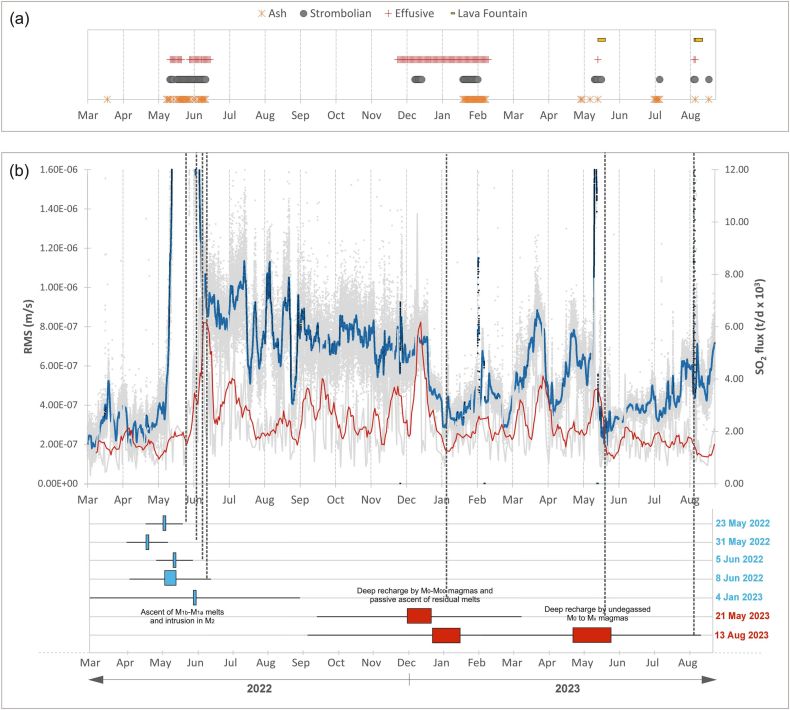
Petrological, geochemical and geophysical data have been integrated to characterize the magmatic processes driving the volcanic activity at the South East Crater of Mt. Etna between 2022 and 2023. The studied period includes two phases of dominant effusive activity that occurred in May–June 2022 and November 2022–February 2023 and a subsequent explosive phase characterized by two lava fountaining episodes of 21 May and 13–14 August 2023. Petrological constraints on olivine zoning and diffusion timescales enabled the identification of some dominant phases of magma intrusion and emplacement at various crustal depths, which temporally correlate with the records of bulk plume SO2 flux and volcanic tremor amplitude and source location associated to magma/gas migration through the upper conduits. The onset of effusive activity in May 2022 is consistent with the ascent of fresh volatile-rich magma towards the shallowest portion of the plumbing system (<2 km below the summit). Several months later, magmatic inputs from deeper reservoirs remobilized the previously emplaced residual melt, prompting the second effusive phase in November 2022. Paroxysmal eruptions during 2023 developed in response to the activation of the deepest magmatic environments (>9 km below the summit), and the rapid migration of Fo80 to Fo86 magmas releasing large amounts of volatiles during ascent. This study demonstrates that petrological records of magmatic processes can be linked with real-time monitoring signals in the lead-up to eruptions to ensure a more accurate interpretation of the conditions and processes that can cause changes in the state of volcanic activity.